Introduction: The Question That Opens Every Door
If you’re planning to visit, study, work, or even move permanently to Denmark, chances are someone will ask you: “So, what are you doing in Denmark?”
It’s a simple question, but behind it lies a world of meaning. For Danes, this question isn’t just small talk — it’s a way of understanding your place in society. Whether you’re here as a tourist exploring Copenhagen’s canals, a student at Aarhus University, or a professional joining the growing green energy sector, your “why” matters.
But if you’re new, you might not even know what to say. What are you doing in Denmark? What can you do here? And how do you fit into a country with such a unique culture, work-life balance, and way of organizing society?
This guide will help you answer that question — both to others, and to yourself.
Understanding Denmark: A Quick Snapshot
Before diving into “what you’re doing here,” let’s set the scene. Denmark may look small on a map, but it packs in:
- Population: Around 6 million people.
- Language: Danish, though most Danes speak excellent English.
- Government system: A constitutional monarchy with one of the world’s most stable democracies.
- Economy: Strong focus on green energy, tech, design, pharmaceuticals, and agriculture.
- Global reputation: Ranked among the happiest countries in the world year after year.
Denmark is a place where tradition meets modernity. Vikings and fairy tales shaped its history, but wind turbines, world-class architecture, and social welfare shape its present.
So when you arrive, people don’t just want to know your name. They want to know your story — your purpose — in this society.
Why Danes Ask “What Are You Doing in Denmark?”
More Than Small Talk
In many cultures, a typical opening line might be, “How are you?” or “What do you do for work?” In Denmark, it often becomes: “What brings you here?”
This isn’t just curiosity. Danish culture values clarity and straightforwardness. People want to understand where you fit — are you a student, worker, expat spouse, or just a tourist?
Social Context
- In a highly organized society, your role helps others understand how to relate to you.
- It’s also practical: if you’re a student, they might talk about Danish universities; if you’re a worker, they’ll mention job opportunities.
So your answer matters more than you think.
Coming to Denmark as a Tourist
If your answer is: “I’m just visiting!” — then welcome to one of Europe’s most visitor-friendly destinations.
What You’ll Likely Do
- Explore Copenhagen: Nyhavn harbor, Tivoli Gardens, The Little Mermaid statue.
- Day trips: Castles like Kronborg (Hamlet’s castle), Roskilde’s Viking Ship Museum.
- Nature: Cycle along the coastline, visit Møns Klint (white chalk cliffs), or take a ferry to Bornholm island.
How Danes See Tourists
Danes are generally welcoming, but they value respect for their way of life. Learn a few Danish words like hej (hi) and tak (thanks), and you’ll be appreciated.
Travel Tip
Tourists are often surprised by prices. Denmark is not cheap. Budget accordingly, or enjoy “hygge” (coziness) with simple pleasures like bakery treats, cycling, and free museums.
Studying in Denmark
Answer: “I’m here to study!”
Why Denmark Attracts Students
- Free or affordable education for EU citizens; scholarships available for non-EU students.
- Universities like University of Copenhagen and Aarhus University rank highly worldwide.
- Focus on group work, critical thinking, and independence.
Life as a Student
- You’ll likely bike everywhere.
- Classes are more informal; students often call professors by first name.
- Part-time jobs are possible, though language skills help.
The Bigger Picture
Many students stay after graduation because Denmark actively encourages international talent to remain and work in its labor market.
Working in Denmark
Answer: “I came here to work.”
Denmark’s Work Culture
- Flat hierarchy: Bosses are approachable.
- Work-life balance: 37-hour work week, long vacations, flexible schedules.
- Collective agreements: No legal minimum wage, but strong union-negotiated pay.
Industries That Welcome International Talent
- Green energy (wind turbines, solar, sustainability).
- IT & tech (Copenhagen and Aarhus are hubs).
- Life sciences (Novo Nordisk, Lundbeck).
- Design and architecture.
Practical Insights
- Work contracts are usually clear and well-structured.
- English is often the working language in international companies.
- Networking is subtle — LinkedIn is widely used.
Moving for Love or Family
Answer: “I moved here for my partner/spouse/family.”
This is incredibly common, and Danes understand it well. But it comes with unique challenges.
What It Means Day to Day
- Adapting to the language is crucial.
- Building your own network takes effort, since Danes often have lifelong circles of friends.
- Danish family life is highly structured around children, school, and work-life balance.
Resources
- Municipalities often offer free or low-cost Danish language classes.
- International groups (on Facebook or Meetup) provide support for expats.
Discovering Danish Society
So beyond your personal answer, what can anyone do in Denmark to feel at home?
Learn About “Hygge”
This famous Danish concept means coziness, comfort, and togetherness. Think candles, good food, and warm company — especially during long winters.
Understand Janteloven
The “Law of Jante” is an unwritten cultural rule: don’t think you’re better than others. Humility and equality are deeply valued.
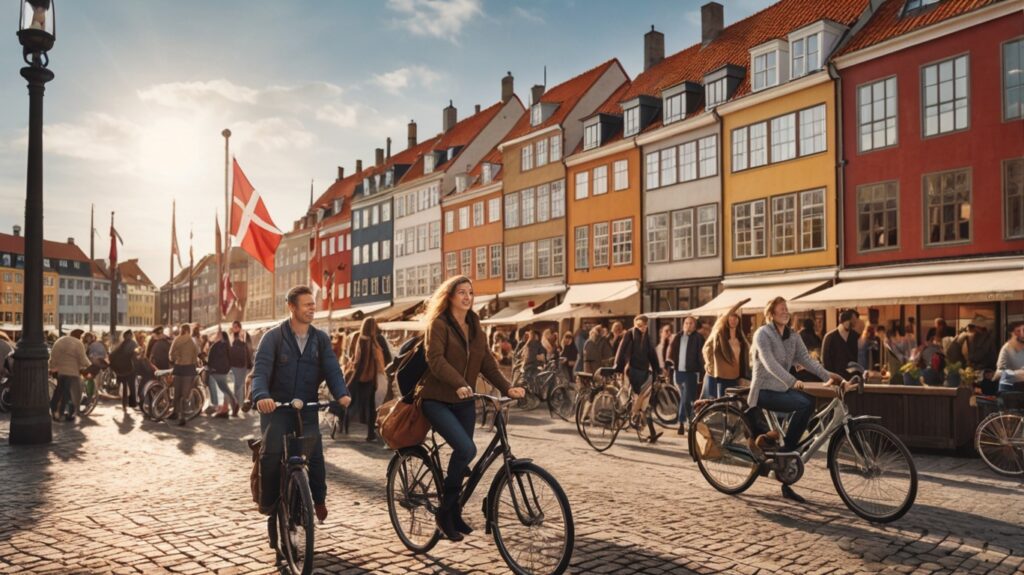
Get on a Bike
Denmark is one of the most bike-friendly countries in the world. Over 90% of Danes own a bike, and the infrastructure is designed for cycling.
Embrace the Outdoors
Even in winter, Danes spend time outside — walking, running, swimming (yes, even in icy water).
Challenges You Might Face
- The Weather: Long, dark winters can be tough.
- The Language: Danish is tricky, with soft pronunciation.
- Social Circles: Making Danish friends takes time, but once you do, they’re loyal.
- The Cost of Living: High taxes and high prices, but excellent welfare services in return.
Tips for Thriving in Denmark
- Learn basic Danish phrases.
- Respect biking rules — they’re taken seriously.
- Be on time. Danes value punctuality.
- Take advantage of the welfare system (healthcare, education).
- Explore the country — it’s small, but every region has unique charm.
Conclusion: What Are You Doing in Denmark?
So, when someone asks you “What are you doing in Denmark?” — you now know that it’s more than just small talk. It’s a cultural question, a way of placing you within the Danish way of life.
Whether you’re a tourist exploring castles, a student diving into group projects, a worker building a career in green tech, or someone who moved for love — your purpose here matters.
Denmark isn’t just a country you live in; it’s a society you join.
You might like this:
P20250621-002