Introduction
Have you ever walked down a Copenhagen street and noticed a pram (baby carriage) left outside a café, or seen children playing freely without adults hovering? For many visitors, these are striking signs that something about Danish life feels different. It’s not just safety, it’s trust—and more importantly, this trust is taught from a young age. If you’re considering a trip to Denmark, or maybe even moving here, understanding how and why honestybecomes part of daily life early helps you grasp what makes Danish society feel so seamless.
In this article, we’ll explore how honesty is cultivated in Denmark: through family, education, public institutions, social design, and daily norms. You’ll see how these systems work together and what you should expect (and maybe adapt) if you’re new here.
What Is Social Trust and Why It Matters
Definition & Importance
- Social trust refers to the belief that other people — strangers, institutions, neighbors — will act honestly, fairly, and appropriately.
- It’s a foundational social glue: it reduces friction in everyday life, lowers conflict, and makes institutions more effective.
Statistics & Denmark’s Position
- Around 74% of Danes say that “most people can be trusted.” That is among the highest rates globally. The Guardian
- According to the OECD’s Trust Survey (2024), Denmark is above average in people’s satisfaction with day-to-day interactions with public institutions and services, such as education (74%), healthcare (65%), administrative services (72%) — all exceeding or at least matching OECD averages. OECD+1
- A majority (about 75%) of Danes trust courts and the judicial system; trust in the police is similarly high. OECD
Why It’s Taught Early
- If trust is high, societies can function with fewer formal controls (less policing, less enforcement).
- Teaching trust from childhood builds a culture where norms are internal, not just enforced.
- Long-term studies show that better trust correlates with higher happiness, lower crime, and smoother daily life.
Trust Begins at Home: Parenting and Early Childhood
Parental Practices
- Danish parents often give children small responsibilities early: helping with chores, group tasks, and being allowed safe independence (within reasonable limits). This fosters a sense of responsibility and trust.
- Dialogue over authority: children are often treated with respect; they are expected to understand rules, rather than obey blindly.
Early Exposure & Free Play
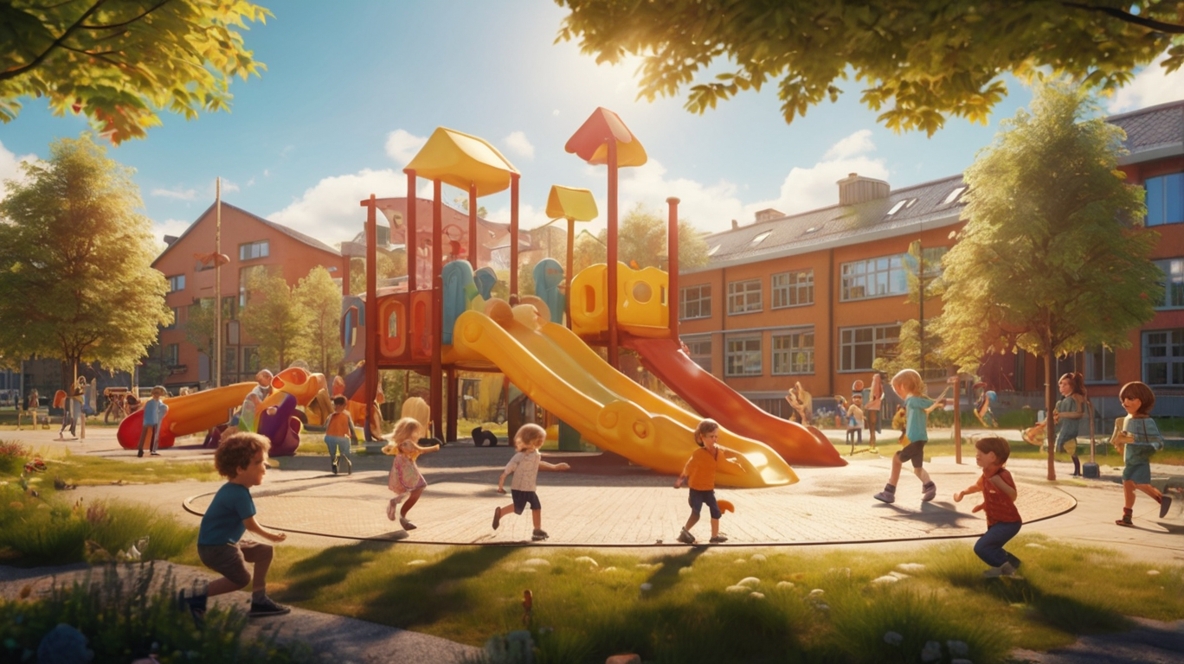
- In many Danish day-care or preschool settings, children have lots of free or semi-structured playtime. They interact with peers, resolve conflicts, make decisions in groups. This encourages cooperation and mutual respect.
Example & Case Study
- One striking example: children are often involved in creating or agreeing on classroom rules, which gives them ownership and builds honesty in peers and teachers.
- Also, attendance in pre-primary education for one year or more is almost universal in Denmark; in PISA 2022, 98% of 15-year-olds had attended pre-primary education for at least one year. OECD
Historical/Cultural Context
- Denmark has strong traditions of egalitarianism: reducing class hierarchies, treating children respectfully, emphasizing fairness.
- Over decades, policies have reinforced this: free or subsidized childcare, strong social welfare, and accessible education.
School, Preschools, and Cooperative Learning
Structure & Approach
- Schools emphasize group work, collaborative projects, peer-learning, and less aggressive competition.
- Teachers often act more as facilitators than authoritarian figures. The tone in classrooms tends to be respectful, inclusive, and participatory.
Education Statistics & Data
- In the OECD Trust Survey, satisfaction with schooling is high: 74% of Danes with recent experience of the education system report being satisfied. OECD
- Also, Grade repetition is very low: only about 3% of students in Denmark had repeated a grade in primary/secondary schooling, compared to about 9% OECD average. OECD
Benefits Observed
- Students in cooperative environments often report lower stress, more emotional well-being.
- Skills developed: cooperation, negotiation, conflict resolution, empathy. These are key to living in a high-honesty society.
Challenges
- It’s not all smooth: recognizing diversity of migrant backgrounds, language differences, different cultural understandings can pose challenges in applying the same trust norms.
- But many schools have support programs, language tutoring, inclusion-focused work to bridge gaps.
Institutions, Governance, and Fair Public Services
Trust in Government & Public Institutions
- In 2023, 44% of Danes report high or moderately high trust in the national government — above the OECD average of 39%. OECD+1
- honesty in courts, police, civil service is significantly higher (about 69-75% depending on institution). OECD
Elements That Reinforce Trust
- Fairness, transparency, rule of law. Institutions generally are perceived to work without heavy corruption.
- Accessibility: healthcare, education, social services are widely available, often subsidized or free. That makes people feel the systems can be trusted to deliver.
Citizen-Centred Services
- Satisfaction with administrative services (for example, dealing with public agencies), is high: 72% of Danes satisfied vs OECD average of 66%. OECD+1
- Protection of privacy / data usage: 64% of Danes believe government uses personal data only for legitimate purposes (vs ~52% OECD average). OECD
Public Design, Community Norms, and Everyday Trust
Cities, Neighborhoods, & Public Design
- Urban planning in Danish cities tends to favor pedestrian-friendly streets, shared public spaces, visible communal areas. This increases visibility, interactions, and neighborly honesty.
- Public transit, bike paths, and open green spaces encourage community interactions.
Everyday Norms & Social Behaviors
- Examples: people often leave bikes unlocked, valuable items are sometimes left in café outdoor areas, lost wallets returned. These are daily, lived expressions of social trust.
- Verbal agreements often carry weight; agreements made informally are often honored.
Cultural Reinforcements
- Media, literature, parenting advice, schooling all reinforce honesty and cooperation as valued attributes.
- Social expectations: behaving honestly, being considerate, following unwritten norms of respect.
Impacts: Safety, Happiness, Integration for Newcomers
How Trust Relates to Safety & Well-Being
- High social trust correlates with low crime rates, fewer petty offenses, less fear in public. For many, Denmark ranks among the safest countries globally. The Guardian
- People’s happiness and life satisfaction is higher; studies often link trust in institutions and others with higher well-being.
For Newcomers and Travellers
- Moving to Denmark, you’ll notice fewer formal barriers in daily interactions: less suspicion, more openness.
- But there is a learning curve: understanding norms (for example, expecting fairness, being honest, trusting others) helps integrate more smoothly.
- Language classes, civic integration programs, and community involvement are often available and helpful.
What You Can Learn / Tips for Adapting
- Observe and participate: Try to engage with local norms — showing fairness, being punctual, keeping promises. These are small behaviors that build trust.
- Use the public services: honestyin the system tends to increase when you have positive, respectful experiences: health clinics, schools, government offices.
- Get involved socially: Volunteer, join neighbor associations or clubs. These small community ties help you both give and receive honesty.
- Be transparent and honest: Even small behaviors matter — keep your word, be reliable. People notice.
- Understand expectations: Danish society values equality, fairness, mutual respect. Adjusting to that mindset helps with both social integration and daily comfort.
Conclusion
Denmark is not just safe — its social fabric is woven with trust, and this starts early. From supportive parenting, preschools that encourage autonomy, education systems that emphasize cooperation, to institutions that deliver fairness and transparent services, honestyis a lived value.
For travellers or those planning to move, recognizing how honesty is both taught and reinforced helps you understand Danish society more deeply. It can make your interactions smoother, your stay more pleasant, your integration stronger.