Playgrounds in Denmark often surprise visitors. Many people expect soft floors and very safe equipment. However, Danish playgrounds feel more adventurous.
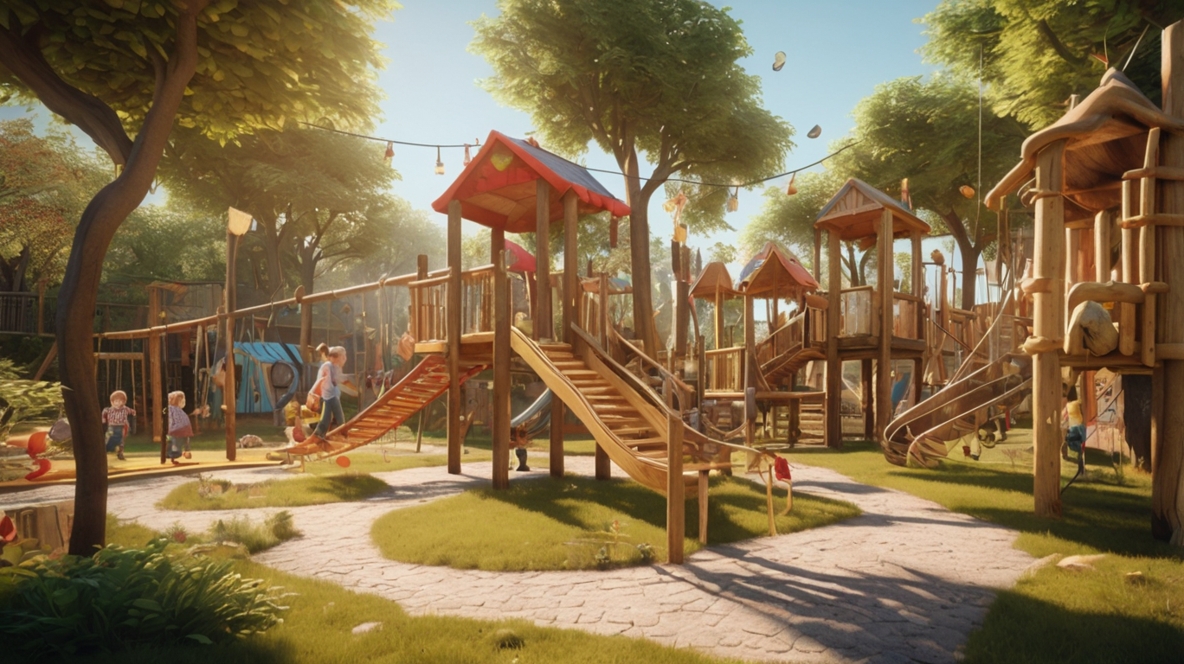
Children climb tall wooden towers. Others balance on logs or rope bridges. Some build huts with planks and ropes. At first, the space may look messy or even risky.
Yet the design is intentional.
Denmark is known as a safe and organized country. Streets are calm. Daily life works well. However, childhood here is not built on strict control.
In many Danish playgrounds, children explore freely. They test their limits and try new ideas. As a result, they learn through experience.
Because of this freedom, play becomes creative. Confidence grows step by step.
The Origins of Danish Adventure Playgrounds
The idea behind these playgrounds started more than 100 years ago.
At that time, most playgrounds looked the same. They had swings, slides, and metal climbing frames. Equipment rarely changed.
However, teachers noticed something interesting. Children often ignored the fixed equipment.
Instead, they played with sand, sticks, and wood. For example, they built houses, bridges, and tunnels.
Because of this behavior, educators asked a new question.
What if playgrounds focused on imagination?
This idea created adventure playgrounds. These spaces used logs, ropes, sand, and wooden boards.
Children could shape the playground themselves. Therefore, every visit felt new.
How Danish Playgrounds Encourage Safe Risk
Many Danish playgrounds include small challenges.
Children climb tall structures. They cross rope bridges. Some run down slopes. Others balance on wooden beams.
These activities include some risk. However, the risk is controlled.
Because of this design, children test their abilities safely.
Through this process, they learn important skills. First, they judge height and distance. Then they learn to manage fear.
As a result, confidence grows.
Creativity and Imagination in Danish Playgrounds
Creativity is another key feature.
Many playgrounds include loose materials. These can be wood pieces, sand, ropes, or water.
Children move these materials around. One day they build a castle. The next day they create a pirate ship.
Because the environment changes, children invent new games often.
Therefore, imagination becomes the main tool.
Why Danish Society Supports Creative Playgrounds
This design reflects a key value in Denmark: trust.
Parents trust teachers. Teachers trust children. Communities trust each other.
Because of this trust, adults do not control every moment of play.
Instead, they watch from a distance. They step in only when needed.
In addition, Danish schools value free play. Children often learn best when they solve problems themselves.
Therefore, playgrounds are seen as places for growth.
The Development Benefits of Danish Playgrounds
Research shows several benefits.
First, children become more active. They climb, run, and balance more often.
As a result, their motor skills improve.
Second, creativity increases. Children invent games instead of following rules.
Third, social skills grow. Kids build things together and solve problems as a group.
Finally, emotional strength develops. When children overcome challenges, confidence rises.
These skills often stay with them into adulthood.
Why Danish Playgrounds Inspire Other Countries
Many cities now study Danish playgrounds.
Urban planners see how these spaces help children learn.
Because of this, other countries build similar play areas.
For example, many new parks now use natural materials. Some also include climbing structures and building zones.
As a result, more children enjoy creative outdoor play.
Experiencing Danish Playgrounds Yourself
Visitors can easily see this culture of play.
Cities such as Copenhagen, Aarhus, and Odense offer many playgrounds.
Children climb, build, and explore in these spaces.
Watching them play is fascinating.
Each child plays in a different way. Some build structures. Others climb or explore hidden corners.
Meanwhile, new games appear all the time.
In Danish playgrounds, imagination leads the experience.
Related Reading:
A Culture of Trust in Everyday Life
Have you ever walked down a street in Copenhagen and noticed a baby carriage parked outside a café?
Inside, parents drink coffee while their child sleeps peacefully outside.
For many visitors, this scene feels unusual. In some countries, it might even seem unsafe. In Denmark, however, it is completely normal.
This moment reflects something deeper in Danish society: trust.
Children are given independence early. Parents and teachers believe that young people learn best when they can explore and make decisions.
Because of this mindset, responsibility and honesty become part of daily life from an early age.
If you want to understand this cultural foundation better, you can read more about how trust shapes Danish society.. Read more
Family Experiences in Copenhagen
Copenhagen is also one of Europe’s most family-friendly cities.
Parks, museums, and outdoor spaces make it easy for children to explore while adults relax. Families can visit harbor baths, green parks, or interactive museums.
The city offers many activities designed for young explorers.
The best part is that parents often get time to relax while children stay busy discovering new things.. Read more