
Introduction: Escaping the Noise of Modern Life
Imagine this: you step off a small ferry onto a peaceful, phone-free Danish island. The air smells of salt and apples, the streets are quiet, and the biggest sound you hear is the wind moving through the trees. Before you even unpack your bag, something unusual happens—you hand over your smartphone.
Yes, your phone goes into a box. No Instagram. No TikTok. No endless notifications. For one week, you’ll live on a phone-free island, without constant digital noise. Instead, you’ll focus on your studies, your thoughts, and maybe even rediscover how calm your mind can feel.
Sounds impossible in today’s hyper-connected world? Well, in Denmark—it’s real. This bold experiment is designed to help stressed students unplug, recharge, and find focus in ways that most of us have forgotten.
For anyone curious about Danish culture, education, or life balance, this story reveals more than just a quirky retreat—it shows how Denmark approaches problems differently than many other countries. And if you’re considering studying, traveling, or even moving to Denmark, this insight gives you a taste of what makes life here so unique.
Why Denmark Created a Phone-Free Study Island
To understand why Denmark launched such a project, you need to know something about the country’s values. Denmark isn’t only known for Vikings, bicycles, or pastries—it’s also famous for protecting mental well-being.
- Denmark regularly ranks as one of the world’s happiest countries.
- Surveys show that Danes report lower stress levels than most Europeans.
- A big reason is that balance—between work, study, and life—is treated as essential.
But like everywhere else, Denmark faces a new challenge: digital distraction. University students spend hours scrolling, comparing, and juggling too much information. Anxiety and burnout have become global problems.
Instead of ignoring it, Denmark tried something radical: build a place where students can disconnect completely and rediscover focus.
Meet Fejø: The Phone-Free Island with a Big Idea
The project takes place on Fejø, a small island in southern Denmark.
- Population: around 500 people.
- Known for: apples, calm lifestyle, and slow living.
- Not a typical tourist spot—but that’s exactly the point.
In May 2025, Denmark’s Ministry of Education, together with mental health experts, invited stressed university students to spend time on Fejø.
The rules were simple:
- Phones, laptops, and tablets locked away.
- Social media completely off-limits.
- No Netflix, no YouTube, no digital distractions.
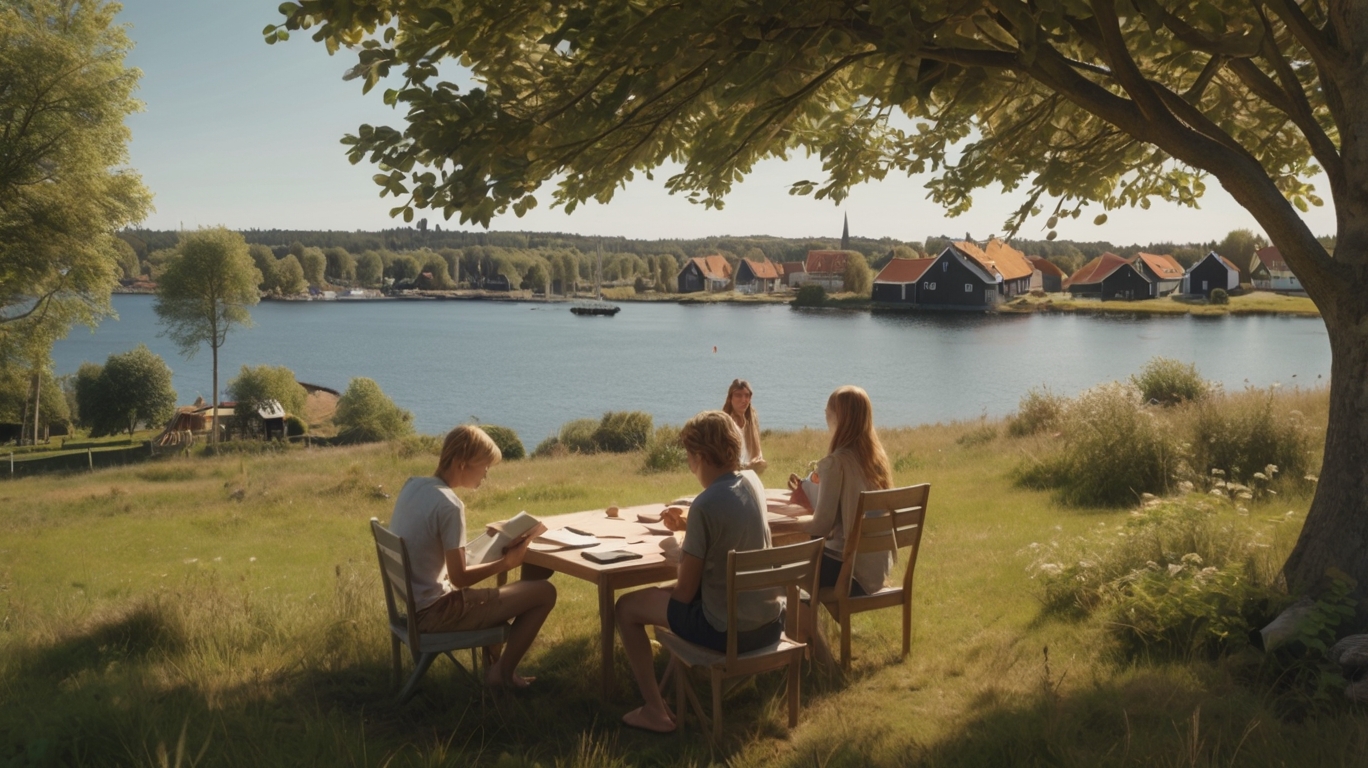
Instead, students studied with books and printouts, took walks in nature, and joined discussions or mindfulness sessions.
The aim wasn’t punishment—it was about giving students space to breathe and study without pressure from the outside world.
What Happens During a Phone-Free Digital Detox Retreat
Daily life on Fejø is structured but calm. A typical day looks like this:
- Morning: Focused study with books or printed material.
- Afternoon: Group sessions, outdoor activities, or guided mindfulness.
- Evening: Shared meals, games, and real conversations.
Psychologists help students manage stress and practice techniques they can take back home. The goal isn’t just one week of peace—it’s long-term change.
And it works. According to early reports:
- 87% of students said their concentration improved.
- 75% reported better sleep.
- 92% wished their universities offered similar retreats.
For a generation constantly online, this experiment feels almost revolutionary.
Why This Could Only Happen in Denmark
You might wonder: why Denmark? Why not the U.S., U.K., or elsewhere?
The answer lies in Denmark’s culture:
- Hygge: A Danish concept of comfort and coziness, often with candles, warm food, and meaningful conversations. Hygge reflects a cultural priority: slow down, connect, and enjoy simple moments.
- Education Values: Danish universities often emphasize collaboration over competition. Mental health and student well-being are considered just as important as grades.
- Trust in Society: Denmark has high trust between people and government. When the government launches an unusual project, many people are willing to try it.
This cultural mix makes it possible to design something like a phone-free island—and for students to embrace it rather than rebel against it.
Could This Work in Other Countries?
Here’s the big question: would such an experiment succeed elsewhere?
In the U.S. or U.K., education often emphasizes hustle and constant productivity. Taking a week offline might be seen as wasted time. But Denmark flips the script: if a break improves mental health and focus, it’s actually an investment in better learning.
So, the challenge for other countries isn’t just logistics—it’s mindset. Would students (and parents, and schools) see digital silence as valuable? Or would they fear “falling behind”?
Lessons for Anyone Moving, Studying, or Traveling in Denmark
If you’re thinking about Denmark for study or work, this story offers deeper lessons:
- Work-Life Balance Is Real: Danes value free time, family, and mental space.
- Phones Aren’t King: Many workplaces and schools encourage device-free moments.
- Wellness Comes First: Policies often protect mental health as much as physical health.
- Slow Living Is Normal: From long dinners to bike rides, Danish life often moves at a calmer pace.
For foreigners, this can feel strange at first—some even mistake it for laziness. But soon, many discover that this slower rhythm makes life not just calmer, but more productive.
Practical Tips: How to Experience Danish Calm
Even if you can’t join Fejø’s experiment, you can taste Denmark’s approach to balance:
- Visit Small Islands: Denmark has hundreds of islands—many perfect for quiet retreats. Ærø, Bornholm, or Samsø offer peace and nature.
- Practice Hygge: Light a candle, read a book, and enjoy time with friends without phones.
- Study in Denmark: Universities like Copenhagen, Aarhus, or Aalborg integrate student well-being into campus life.
- Digital Detox at Home: Try one phone-free day each week—you’ll be surprised how refreshing it feels.
Related Topics You Might Explore
- How “hygge” shapes everyday Danish life.
- Why Denmark ranks as one of the happiest countries.
- Education in Denmark: collaboration vs. competition.
- Work-life balance in Scandinavia.
These related themes can give you an even deeper picture of Danish life.
Conclusion: Denmark’s Quiet Revolution
A phone-free island for students may sound like a gimmick—but it reflects something bigger about Denmark. While much of the world races faster into digital overload, Denmark asks a different question: What if happiness, focus, and calm matter more than constant connection?
For students drowning in stress, Fejø offers proof that there is another way. For travelers, it’s a glimpse into a culture that values balance above burnout. And for anyone moving to Denmark, it’s a reminder: life here may be slower, but it’s built on a foundation of peace, trust, and well-being.
So, what about you? Would you lock away your phone for a week in exchange for calm and focus? Or does that sound unbearable?
Share your thoughts below—I’d love to hear them.
And if you want to keep exploring Denmark’s secrets—from education and culture to travel tips—make sure to follow Denmark Explained.


