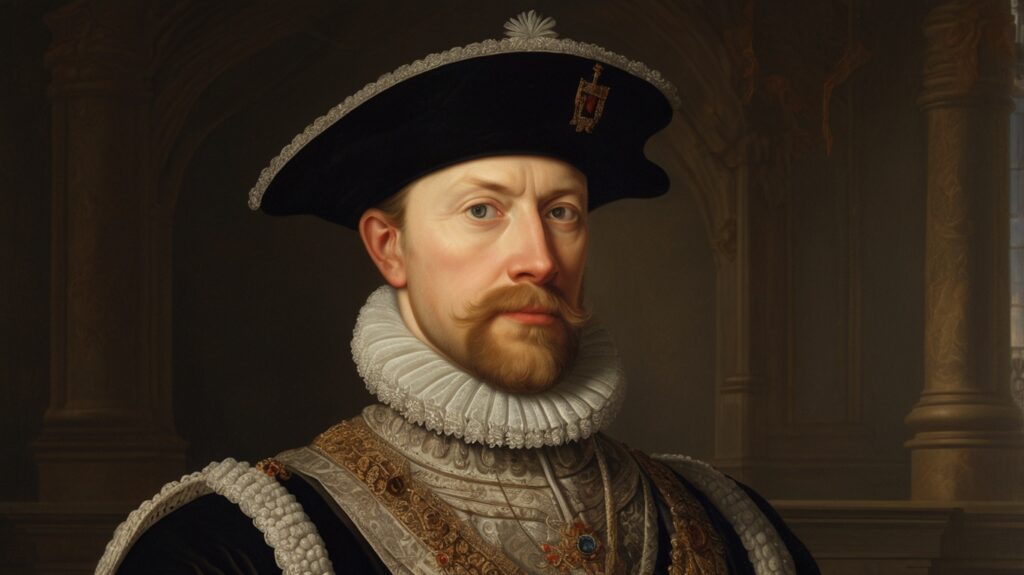
Among Denmark’s storied monarchs, King Christian IV (1577–1648) stands out as a figure of ambition, resilience, and cultural patronage. His nearly 60-year reign—the longest in Scandinavian history—left an indelible mark on the nation’s architecture, economy, and national identity.
King Christian IV was a Monarch with Grand Ambitions
Ascending the throne at 19, Christian IV inherited a kingdom at the height of its power, encompassing Denmark, Norway, parts of present-day Sweden, and overseas territories like Greenland and Iceland. Inspired by his travels to England and Italy, he embarked on an ambitious campaign to modernize Denmark, commissioning iconic structures such as the Round Tower, Rosenborg Castle, and the Royal Exchange (Børsen). These edifices, many bearing his monogram, symbolize his vision of a prosperous and culturally rich nation.
The Warrior King and National Hero
Christian IV’s reign was marked by military endeavors, notably Denmark’s involvement in the Thirty Years’ War. Despite initial successes, the war strained the nation’s finances and led to territorial losses. However, his personal bravery, especially during the naval Battle of Kolberger Heide in 1644 where he lost an eye yet continued to lead, endeared him to his subjects. This act of valor inspired the Danish royal anthem, “Kong Christian stod ved højen Mast,” and solidified his legacy as a national hero.
King Christian IV: Cultural Patronage and Architectural Legacy
Beyond his military pursuits, Christian IV was a patron of the arts and sciences. He founded new towns, supported education, and fostered trade, contributing to Denmark’s economic growth. His architectural projects not only beautified the nation but also reflected his desire to position Denmark as a leading European power.
A Complex Legacy
While his reign had its share of setbacks, including military defeats and economic challenges, Christian IV’s contributions to Denmark’s cultural and architectural heritage are undeniable. His efforts to modernize the nation and his personal bravery have left a lasting impression, making him one of Denmark’s most revered monarchs.
Reflective Question
Considering King Christian IV’s ambitious projects and military campaigns:
Which aspect of his reign had a more lasting impact on Denmark’s national identity?
- A) His architectural and cultural advancements that continue to define Denmark’s landscape.
- B) His military leadership and the embodiment of national resilience during times of conflict.
Reflect on how each facet contributes to the nation’s historical narrative.
P20250504-001