
Introduction: Why Copenhagen Deserves Your Attention
Copenhagen is not just Denmark’s capital—it’s a city full of quirks, history, and innovations that surprise almost every visitor. Whether you’re planning a trip, considering a move, or simply curious about how life works in Denmark, Copenhagen is the perfect starting point.
This article dives into 101 facts about Copenhagen, carefully explained for readers who might not be familiar with Denmark’s culture, traditions, or lifestyle. From Viking roots to modern sustainability, from cozy cafés to world-famous bikes, you’ll discover why Copenhagen consistently ranks among the world’s happiest cities.
The Basics: Geography, People, and Lifestyle
1. Copenhagen Is Denmark’s Capital
Copenhagen (København in Danish) has been Denmark’s capital since the 15th century. Today, it’s home to about 650,000 residents—but with the greater metropolitan area, over 1.3 million people live in and around the city.
2. The Name Means “Merchant’s Harbor”
Originally “Køpmannæhafn” in Old Norse, Copenhagen’s name reflects its trading history. Merchants flocked here to buy and sell goods during the Viking Age.
3. More Bikes Than Cars
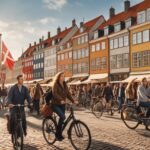
One of the most famous facts: Copenhagen has more bicycles than cars. About 62% of residents commute daily by bike. The city has over 390 kilometers of cycle paths.
4. A City Built on Islands
Copenhagen sits on the eastern coast of Zealand and partly on Amager island, connected by bridges and metro lines. This gives the city its mix of canals, harbors, and waterfront neighborhoods.
5. The Population Speaks Excellent English
Even if you don’t know Danish, you’ll get by easily. Over 85% of Copenhageners speak English fluently, making it welcoming for travelers and expats.
History and Heritage
6. Viking Roots
Denmark was once the land of the Vikings, and Copenhagen carries their legacy. The National Museum and nearby Roskilde Viking Ship Museum tell the story of longboats and warriors.
7. Christian IV: The Builder King
Many of Copenhagen’s landmarks—from Rosenborg Castle to the Round Tower—were built under King Christian IV in the 1600s. He shaped the city’s architecture.
8. Tivoli Gardens Is Older Than Disneyland
Founded in 1843, Tivoli Gardens inspired Walt Disney to create Disneyland. It remains one of the world’s oldest amusement parks.
9. The Little Mermaid Statue
Erected in 1913, Hans Christian Andersen’s “The Little Mermaid” statue is Copenhagen’s most photographed landmark. It’s smaller than most people expect, at just 1.25 meters tall.
10. WWII Resistance
During World War II, Danish citizens and Copenhageners famously helped save nearly all of Denmark’s Jewish population by smuggling them to Sweden.
Daily Life in Copenhagen
11. Hygge Is Real
Copenhagen embodies hygge—the Danish concept of coziness. Think candles, warm drinks, and friendly gatherings during long winters.
12. Expensive but High Quality of Life
Copenhagen is one of Europe’s most expensive cities, but wages and social benefits balance it. You’ll pay a lot for coffee, but healthcare and education are free.
13. Coffee Culture
Danes drink an average of 4 cups of coffee per day. Cozy cafés line every street.
14. Tap Water Is Drinkable
Unlike in many capitals, Copenhagen’s tap water is safe and delicious. Some claim it’s cleaner than bottled water.
15. Harbor Swimming
Yes, you can swim right in the city’s harbor. Copenhagen’s water is so clean that swimming zones open every summer.
Food and Drink
16. Smørrebrød (Open-Faced Sandwiches)
The city’s classic lunch dish: rye bread topped with herring, roast beef, egg, or shrimp. Always eaten with a knife and fork.
17. New Nordic Cuisine
Restaurants like Noma have put Copenhagen on the culinary map. Expect local ingredients prepared in creative ways.
18. Street Food Revolution
Reffen, Copenhagen’s street food market, offers international dishes and a lively waterfront vibe.
19. Danish Pastries Aren’t Called Danish
Locally, pastries are called wienerbrød (Vienna bread), since they originated from Austrian bakers.
20. Beer Is a Big Deal
Carlsberg, founded in 1847, is a global beer giant from Copenhagen. Craft beer culture has also exploded in recent years.
Culture and Attractions
21. Nyhavn Harbor
Those colorful 17th-century buildings along Nyhavn make it the most iconic spot in the city.
22. Strøget Shopping Street
One of Europe’s longest pedestrian streets, perfect for shopping and people-watching.
23. Christiania Free Town
A self-proclaimed autonomous district founded in 1971, known for alternative culture, art, and its famous “Green Light District.”
24. Round Tower
Built in 1642, it’s the oldest functioning observatory in Europe—and you walk up via a spiral ramp, not stairs.
25. Opera House on the Harbor
One of the world’s most modern opera houses, funded by a private donation.
Green and Sustainable Living
26. World’s Green Capital
Copenhagen aims to become the first carbon-neutral capital by 2025. Wind energy, cycling, and green architecture lead the way.
27. Waste-to-Energy Plant with a Ski Slope
CopenHill is a power plant that turns trash into energy—and doubles as an artificial ski slope.
28. City Full of Parks
Over 25% of Copenhagen is green space, from King’s Garden to Amager Fælled.
29. Electric Buses and Harbor Ferries
Public transport is going green with electric buses and solar-powered ferries.
30. Organic Food Everywhere
Denmark has one of the highest shares of organic products in Europe.
Everyday Surprises
31. Babies Nap Outdoors
It’s common to see strollers parked outside cafés with sleeping babies—parents believe fresh air is healthy.
32. Sunday Is “Family Day”
Most shops close early, and the city slows down.
33. Lawnmowers Are Often Robots
In suburban Copenhagen, robot lawnmowers quietly do the job.
34. Street Names Are Hard to Pronounce
Visitors struggle with names like Østerbrogade or Rådhuspladsen. Don’t worry—Danes are used to it.
35. Bicycles Have Priority
Cars must yield to cyclists—something that surprises new arrivals.
Fun and Quirky Facts
- Hans Christian Andersen lived in Copenhagen.
- LEGO was invented in Denmark, and you can visit LEGO shops everywhere.
- Copenhagen has its own beach—Amager Strandpark.
- Every December, Tivoli Gardens turns into a Christmas wonderland.
- Copenhagen Fashion Week is Scandinavia’s biggest fashion event.
- Danish TV series like The Killing and Borgen were filmed here.
- The Royal Guards march daily at Amalienborg Palace.
- Copenhagen has over 15 Michelin-starred restaurants.
- You’ll see swans, ducks, and herons in city lakes.
- The metro runs driverless—no drivers in the front seat.
Why Copenhagen Attracts Expats
- Denmark ranks among the happiest countries every year.
- Work-life balance is taken seriously.
- Commuting times are short compared to most capitals.
- Free Danish classes are often offered to newcomers.
- International schools and communities are growing.
Practical Tips for Visitors and Movers
- Buy a Copenhagen Card for free entry to 80+ attractions.
- Rent a bike—it’s the best way to see the city.
- Public transport is reliable but expensive.
- Winter days are short—only about 7 hours of daylight in December.
- Summer days are long—up to 17 hours of light.
- Always carry a credit card; cash is disappearing.
- Tipping is not required in restaurants.
- Alcohol is sold in supermarkets—no state monopoly.
- Tap into city apps for biking routes and transport.
- Expect high living costs, but excellent services.
Wrapping Up: 101 Reasons to Love Copenhagen
Copenhagen is a city of contrasts: historic yet modern, cozy yet cosmopolitan, expensive yet rewarding. From its Viking heritage to cutting-edge green initiatives, every corner offers something surprising.
Whether you’re visiting for a few days or considering moving here, these 101 facts paint a fuller picture of life in Denmark’s capital.
👉 Want to explore more about Denmark’s culture, lifestyle, and hidden secrets? Follow along, comment below with your favorite fact, and share this with someone dreaming of Copenhagen.
You might like this:
P20250621-003