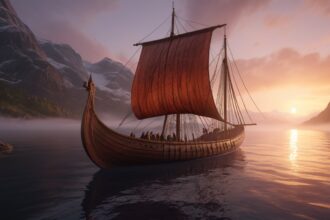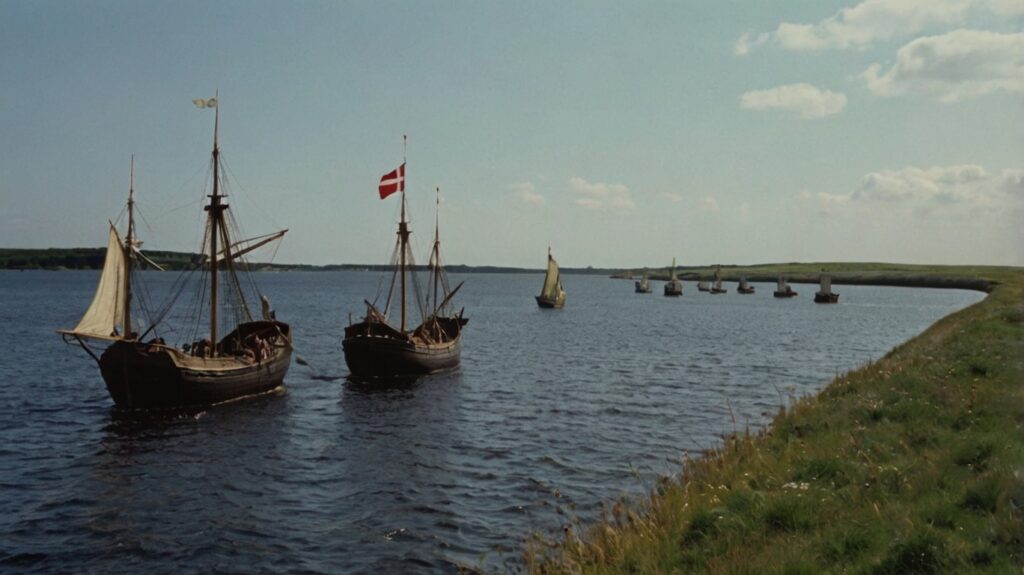
Denmark, a small nation in Northern Europe, has not always been confined to its modern borders. In the medieval and early modern periods, Denmark was a significant power, wielding influence over vast territories and maritime routes. This article delves into the periods when Denmark, through strategic alliances, conquests, and naval prowess, “ruled the world.
1. The Viking Age (8th–11th Century): Global Reach of Denmark
The Viking Age (circa 793–1065) was a time when Denmark, along with Norway and Sweden, dominated much of the Northern Hemisphere. Danish Vikings were skilled sailors, traders, and warriors who ventured far beyond their homeland to explore, raid, and establish settlements.
- Territorial Expansion: Danish Vikings established control over large parts of England, particularly during the Danelaw period (9th–10th century). This area was governed under Danish law and culture.
- Trade Networks: Viking trade routes extended from the Baltic Sea to the Mediterranean, connecting Denmark to distant regions like Constantinople and the Middle East.
- Settlements and Colonies: Danish Vikings founded settlements in places such as Ireland, Normandy, and Iceland, leaving a lasting cultural and genetic legacy.
2. The Kalmar Union (1397–1523): A Nordic Empire Under The Leadership of Denmark
The Kalmar Union was a political union that brought, Norway (including Iceland, Greenland, and the Faroe Islands), and Sweden under a single danish monarch. Though primarily a Danish-led initiative, the union represented a significant consolidation of power in Scandinavia.
- Formation: The union was established in 1397 under Queen Margaret I, who skillfully navigated alliances and succession disputes to unify the Nordic kingdoms.
- Peak Influence: At its height, the Kalmar Union controlled vast territories, including parts of modern-day Finland and the North Atlantic islands. This gave Denmark substantial influence over European trade and politics.
- Decline: Internal conflicts and Swedish resistance ultimately led to the dissolution of the union in 1523, but the danish crown retained control over Norway and its territories until 1814.
3. The Danish Colonial Empire (17th–18th Century)
Denmark became a colonial power during the Age of Exploration, establishing overseas territories and trading posts across the globe.
- North Atlantic Colonies: the danish crown maintained control over Greenland, Iceland, and the Faroe Islands, which remain integral to the Kingdom of Denmark today.
- Caribbean Colonies: Danish settlers established plantations on islands like St. Thomas, St. John, and St. Croix in the West Indies. These colonies were heavily involved in the transatlantic slave trade.
- Indian Ocean Presence: Denmark established trading posts in India (e.g., Tranquebar) and West Africa (e.g., Fort Christiansborg in modern Ghana), focusing on commerce and resource extraction.
4. Naval Dominance and Military Power of Denmark
Denmark’s influence as a maritime power was unmatched in Northern Europe during various periods.
- Control of the Øresund: The strategic position allowed it to control the Øresund Strait, a critical maritime passage connecting the North Sea and the Baltic Sea. The tolls collected from passing ships enriched the kingdom for centuries.
- Naval Strength: The danish navy was a formidable force, crucial in defending its territories and asserting control over trade routes.
5. Cultural and Political Legacy
Denmark’s periods of dominance left a lasting impact on world history:
- Legal Systems: Danish law influenced the development of legal systems in areas under its control, such as the Danelaw in England.
- Architecture and Language: Danish settlers contributed to the cultural and linguistic landscapes of the regions they occupied.
- Modern Greenland: The danish relationship with Greenland remains a legacy of its colonial history, with Greenland holding a unique status within the Kingdom of Denmark.
Conclusion
While the danish crown may no longer command an empire, its historical periods of influence demonstrate the nation’s ability to punch above its weight on the global stage. From the Viking Age to the Kalmar Union and the colonial era, Denmark has left an indelible mark on world history, shaping trade, politics, and culture across continents.