The Danish Football League System: Heart of Denmark’s Sports Culture
Denmark is renowned for many things—its fairy-tale castles, cycling-friendly cities, innovative design, and strong welfare system. But for sports enthusiasts and newcomers curious about Danish culture, one aspect that truly captures the nation’s spirit is football. In Denmark, football isn’t just a game—it’s a cornerstone of community life, a source of national pride, and a pathway for young talents to rise to international fame.
At the center of this vibrant football ecosystem is the Danish football league system, a well-structured hierarchy that combines professional and amateur clubs in a competitive pyramid. Whether you’re visiting, planning to move, or simply trying to understand Danish culture, learning about the league system provides fascinating insight into how Denmark fosters teamwork, passion, and athletic excellence.
In this guide, we’ll explore the league’s structure, its historical roots, notable teams and players, and its cultural significance in Danish society.
1. The Structure of Danish Football
The Danish league system comprises several tiers:
- Danish Superliga (Superligaen):
- The top professional league in Denmark, featuring 12 teams.
- The season runs from late July to May, with teams playing each other three times in a split-season format.
- After 22 regular-season matches, the league splits into two groups: the Championship Round (top six teams) and the Relegation Round (bottom six teams).
- The champion qualifies for the UEFA Champions League qualifiers, while other high-ranking teams may qualify for the UEFA Europa League or UEFA Conference League.
- 1st Division (1. Division):
- The second tier of Danish football, with promotion to the Superliga and relegation to the 2nd Division.
- 2nd Division:
- This semi-professional league serves as the third tier and is divided into two regional groups.
- Lower Tiers:
- Below the 2nd Division are regional leagues, which include the Denmark Series and various local leagues, catering to amateur clubs.
2. Key Teams and Rivalries
Danish football boasts several iconic clubs, including:
- FC Copenhagen (FCK): Based in the capital, this club is one of the most successful in Danish football history, known for its consistent European appearances.
- Brøndby IF: FCK’s archrival and another powerhouse of Danish football, Brøndby enjoys a passionate fanbase and a history of domestic success.
- Aalborg BK (AaB), FC Midtjylland, and AGF Aarhus: Other notable teams with a mix of league titles and European campaigns.
The rivalry between FC Copenhagen and Brøndby IF, known as the New Firm, is one of the fiercest in Scandinavian football.
3. Development and Youth Focus in Danish Football
Denmark’s league system is celebrated for nurturing young talent. Many Danish clubs have advanced youth academies, and the country’s emphasis on player development has produced world-class players like Michael Laudrup, Peter Schmeichel, and Christian Eriksen.
The Superliga is often seen as a stepping stone for players aspiring to join Europe’s top leagues, with scouts regularly attending matches.
4. The Role of Fans and Culture
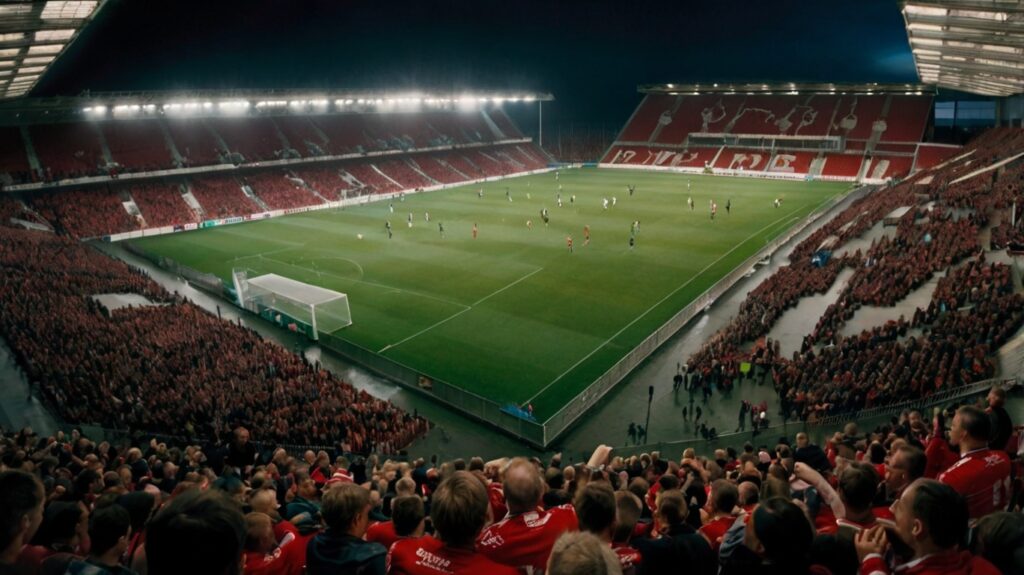
The game in Denmark is more than a sport; it’s a community event. Fans are deeply involved in supporting their local clubs, creating a vibrant atmosphere during matches. The traditions include:
- Chants and Songs: Each club has its unique anthems and chants.
- Derby Days: Matches like FC Copenhagen vs. Brøndby attract nationwide attention.
- Fan Ownership: Some clubs encourage community involvement through fan ownership models.
5. Impact on International Football
The success of the Danish football league extends to the national team, which has benefited from the league’s talent pool. Denmark’s national team has enjoyed significant achievements, including winning the 1992 UEFA European Championship. Many of the squad members hone their skills in domestic leagues before making their mark internationally.
Conclusion
The Danish football league system is a testament to Denmark’s love for the sport and its commitment to fostering talent. From the competitive Superliga to the community-driven lower leagues, Danish football offers a rich experience for players and fans alike. Whether you’re a casual fan or a passionate supporter, exploring Danish football provides insight into a vital part of the country’s cultural fabric.